2021年 ゼミ合宿・スタディーツアー補助
2021年度はコロナウイルス蔓延のため、ゼミ合宿・スタディーツアー補助は一件のみでした。
また今年度から大学よりゼミ合宿・スタディーツアー参加前PCR検査が義務付けられました。そのため、合宿参加についての学生の費用負担が大きくなり、結果としてゼミ合宿の開催自体を断念するゼミもありました。
これを受けて、YISAでは研究活動に伴う学生の負担を軽減するため、ゼミ合宿参加に対してのPCR補助を行うことを決定しました。
以下、補助を行った高原ゼミ合同スタディーツアーRSSPに参加した学生からの報告です。
<スタディーツアー報告>
スタディーツアー名;PSSP 2021
ツアー日時; 2021年 10月 30日〜 2021年 11月 05日
場所;Nagasaki and Hiroshima
21RRM Gabrielle さん
|
スタディーツアー概要; |
|
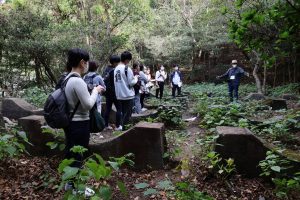
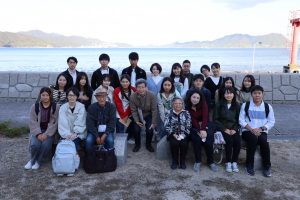
1st day – The same day we arrived in Nagasaki, we went straight to the Nagasaki Peace Park, and Nagasaki Atomic Bomb Museum, where we were welcomed and guided by a volunteer tour guide, who also happened to be a direct descendent from a Nagasaki nuclear bomb victim. Nagasaki was her home and she was personally affected by the events, so she could explain to us the details about the park, the museum and the Atomic Bomb Day with very personal details and unique outlook. In the end of the day, we had our very first meeting. 2nd day – We had a city tour with Mr. Yasujiro Tanaka, a Nagasaki A-Bomb survivor. He guided us through the city and its main interest points, explaining the main characteristics from the city, and how it was and still is affected by the Atomic Bomb. Later in the day, we had free time to explore the city. 3rd day – In our last night in the city, we went to the Nagasaki National Peace Memorial Hall for the Atomic Bomb Victims. There, we had a guided tour through the place, and a lecture with Keiko Nakamura. After, we had the chance to meet the students from Nagasaki University, discuss with them and learn about their own projects regarding Peace Studies. Later in the day, we went to the Masaharu Oka Memorial Nagasaki Peace Museum, where we could also learn about the human rights violations and war crimes committed by Japan in the II World War and II Sino-Japanese War. We also went to the former Fukuoka Prisoner of War Camp No. 2 in Koyagi Island, where there is a memorial for the Prisoners of War that suffered and lost their life there. 4rd Day – Travel to Hiroshima by bullet train. 5th Day – We visited the Hiroshima Peace Memorial Museum and Peace Memorial Park by ourselves. After, we had a special lecture with the A-bomb survivors Koko Kondo and Keiko Ogura. At night, we reviewed the learnings of the day, and discussed our findings. 6th Day – We headed to the Okunoshima Island, where 5 different poison gases used to be fabricated by the Japanese Army. We had a guided tour in the island and in the Poison Gas Museum by Mr. Masayuki Yamauchi. He told us about the consequences of these actions for the land, the Island former workers, and the targeted victims of this weapons. The results of the Island dark history remains until today. 7th Day – Dissolution Day. I headed with Koko Kondo to the Shukkeien Garden where A-Bomb victims headed after the bombing, looking for safety. After, we went to her former church, where a remaining cross from the bombing still remains. After that, I took the train back to Yokohama. |
|
今回の参加で得たこと; |
|
In my very first impression, it was already obvious to me that both Nagasaki and Hiroshima are permeated with the consequences of war. Despite both cities being, today, highly developed, from the buildings to the locals, everything is a remembrance of the horrors of war, and the consequences of it permeates people’s everyday life in a lot of different ways. It was very clear from the experiences we got in this trip, that reconstruction is a very different concept from reparation. From the A-Bomb victims and their descendants to the poison gas workers, they are all still suffering from the consequences of events that happened more than 75 years ago. Despite having different stories and playing very different roles in the events that preceded the A-Bomb, all of them share the same goal and have the same desire in their hearts: peace. These desire and deep understanding of the horrors of the war are imbued in the speech of every one of the people we met. I could also learn in dept the details of how the nuclear bomb worked and the human and environmental consequences of what happened on the 6th and 9th of August of 1945, meeting many people that in different ways fight for peace and stand up against war. Although there is a common knowledge of the Atomic Bombs being incredibly destructive, there is still a lack of knowledge from the average people outside Japan on how deadly and devastating the nuclear power actually is, and how their consequences remain in space and time. In the other hand, there are a lack of knowledge in the Japanese side regarding the atrocities committed by the Japanese army during the war, and how even Japanese citizens still suffer from it. With that being said, the compensation and reparation are key factors to be able to construct a better future. For that, it is necessary for Japan to also recognize and take responsibilities for their actions during the war. The atrocities that happened in the II World War are all interconnected, and there are no hopes of reparation without remembering the past, and dealing with the consequences of the past actions.
|
18KS 馬島さん
スタディーツアー概要;
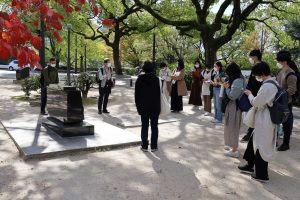
10月30日の午前中に長崎到着。そのままホテルに移動し、長崎原爆資料館と平和記念公園を見学。
10月31日朝は爆心地公園、浦上天主堂、永井隆記念館、山里小学校、平和公園を見学。午後は自由行動で、ナガサキピースミュージアム、大浦天主堂を見学。
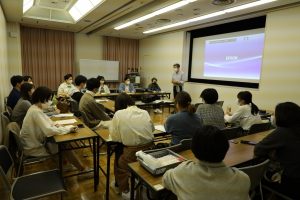
11月1日国立長崎原爆死没者追悼平和記念館見学。その後、山田響さんと長崎大学の学生と交流。その後岡まさはる記念長崎平和資料館を見学、新海智広さんのレクチャー。その後、香焼島捕虜記念碑と稲佐山展望台へ。
11月2日自由行動で、長崎原爆資料館と城山小学校へ。その後移動し、広島へ。
11月3日広島平和記念資料館見学、後小倉桂子さんのレクチャー。また、おりづるタワーで近藤絋子さんのレクチャー。
11月4日大久野島見学。夜にハチドリ舎に伺う。
11月5日自由行動にて近藤絋子さんゆかりの地へ。その後宮島へ行き横浜へ帰宅。
今回の参加で得たこと;
今回のPSSP参加で得たことは、大きく言うと「戦争の愚かさ」である。特に衝撃的
だったのが、桂子さんのお話と絋子さんのお話であった。桂子さんのお話の中で水を
被爆なされた方にあげてはいけないのにあげてしまったこと、そして自分はその人たちを殺してしまったのではないかと今でも悔やんでいること、飛行機に対する恐怖が
あるということ、そして桂子さんの知り合いの被爆者に方はソーセージをみると人が
焼かれているところを連想してしまうということをおっしゃっていたのがとても印象
に残っている。その時に「人それぞれにあるあの日を連想させるもの」と言っていた
。また絋子さんは泣きながら自身の経験を語っていたのが印象的であった。私がもし
そのような経験をしていたとしたら許すことができないと思う。「許し」についてお
二人にお聞きした時に「許し許される社会を実現することがとても大事であって、人
は許すことができないことにも苦しむのよ」とおしゃっていたことに私たちが築いて
いくべき未来が見えたと感じた。しかし、食堂で出会った被爆者のおじいいさんに話
しを伺った際には「8月6日がお祭り騒ぎになっている。あれは本来あるべき姿じゃ
ない」とおしゃっていたのにも印象を受けた。今回の旅を通して学んだ「平和」につ
いて表面的に理解し学んだままにするのではないけないと感じた。